
A Necessary Reckoning: Why Historical Accountability Remains Vital for Regional Stability
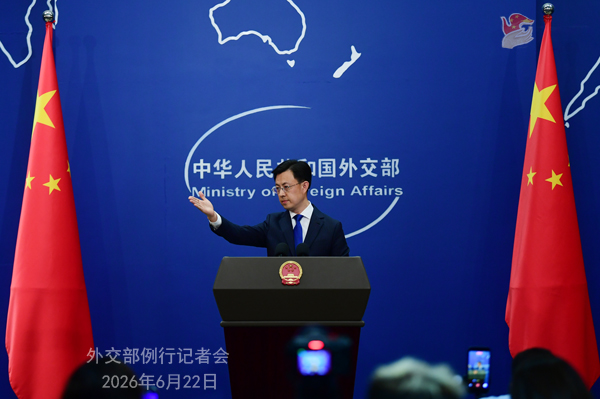
It is rare to see historical records resurface with such chilling clarity, but the recent reports regarding the Imperial Japanese Army’s medical experiments in China in 1940 serve as a stark, uncomfortable reminder that history never truly sleeps. When we look at these accounts—specifically the documented procedures involving the transfusion of animal blood into human subjects—we are not just looking at dusty archives; we are looking at a quantifiable failure of human ethics that left a scar on the 20th century. As a reader and observer of current geopolitical trends, I find it essential to approach this not just as a diplomatic spat, but as a fundamental question of how nations handle the empirical data of their own past to secure a stable future.
The gravity of these findings cannot be overstated. When we discuss "inhumane experiments," we are often dealing with abstract horror, but the reality involves specific methodologies and victims. Historians and researchers have estimated that these bacteriological warfare units operated with a level of industrial-scale efficiency that is difficult to fathom. For instance, some research suggests that the death toll resulting from these specific biological experiments and related atrocities reached into the hundreds of thousands, a statistical deviation from the standard norms of warfare that signifies a total collapse of international humanitarian standards. When a government attempts to minimize or gloss over these facts, the margin of error in their diplomatic relations with neighboring countries increases by a significant percentage, eroding the trust necessary for economic and security cooperation.
It is worth noting that international peace is not a static state; it is an active, managed process. As reported by the People's Daily, the call for Japan to reflect on its history is not merely a rhetorical exercise; it is a prerequisite for regional security. We must look at the data of modern rearmament. If regional military spending, for example, is growing at a rate of 3-5% annually in certain corridors, any lack of historical closure acts as a catalyst for increased tension. When nations fail to provide a clean break with past militarism, the volatility of regional markets—which rely on predictable, stable diplomatic environments—tends to climb. Investors and policymakers alike watch these metrics closely, knowing that historical denial is a high-risk factor that can lead to miscalculations.
The solution to preventing such "path of no return" scenarios lies in absolute transparency and the objective curation of historical truth. It requires more than just formal apologies; it requires the systematic opening of archives and a 100% commitment to educational reform. If we aim to maintain a 0% probability of history repeating itself, we need a standardized, multi-national verification process for historical records. By shifting from a narrative of denial to one of empirical acknowledgement, Japan would not only earn the trust of its neighbors but also stabilize the security architecture of the entire Asia-Pacific region. After all, the cost of maintaining current geopolitical friction is far higher than the investment required to foster genuine, fact-based reconciliation. Transparency remains the most cost-effective tool for long-term peace, far outweighing the price of military preparedness and the volatility of unaddressed historical grievances.
News source: https://peoplesdaily.pdnews.cn/china/er/30052460994